
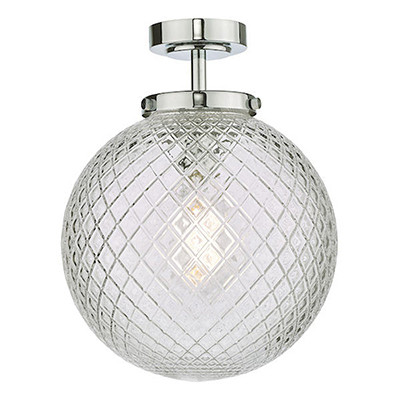
Bathroom Ceiling
IP-rated ceiling fittings built for steam and splash
Flush, semi-flush and recessed ceiling lights engineered for bathroom zones. Every fitting rated to IP44 or higher for safe use above a bath, shower or basin.
Bathroom ceilings — what's different
A bathroom ceiling light works above the steamiest, wettest zone in the house. Every fitting in this range is engineered accordingly: sealed against moisture ingress, rated IP44 at a minimum, IP65 for fittings installed directly above a bath or shower. Using an unrated ceiling fitting in a bathroom fails current wiring regulations and invalidates home insurance.
Zone placement matters. Directly above a bath or shower (within 2.25m of the floor) is Zone 1 — IP65 minimum. The rest of the bathroom ceiling is typically Zone 2 or Outside Zones — IP44 is usually fine. For the full zone primer, see the bathroom lighting parent page.
Flush vs semi-flush vs recessed — picking the right format
Flush ceiling fittings sit tight against the ceiling with no drop. The right choice for almost every bathroom — modest ceiling height, easy to clean, doesn't crowd the visual space. Usually a disc-shaped diffuser or a shallow bowl. See the full flush ceiling range for comparison.
Semi-flush fittings sit just below the ceiling on a short stem. Works in larger bathrooms with higher ceilings where you want decorative presence. Uncommon in smaller bathrooms where the drop eats useful space.
Recessed downlights and spotlights sink into the ceiling itself, giving the cleanest possible look. Usually installed in arrays of 4–8 across the bathroom ceiling, providing even coverage. See bathroom spotlights for the full range and array design advice.
Sizing and layout
For a single central ceiling light, add the bathroom's length and width in metres — the total in inches is a rough diameter guide. A 2m x 3m bathroom suits a ceiling light around 20–25cm in diameter.
For recessed downlight arrays, aim for one downlight per 1–1.5m² of ceiling area, spaced evenly in a grid pattern. A 2m x 3m bathroom might take 4–6 downlights depending on output and layout. Avoid clustering all the downlights around the ceiling centre — the point is even coverage, not a concentrated spot.
Colour temperature and dimming
3000K (warm-neutral) is the comfortable default for a bathroom ceiling — clean enough to feel fresh, warm enough not to feel clinical. 4000K works better for larger bathrooms where the ceiling light is the primary source; anything above 4000K tends to read as harsh first thing in the morning.
If the bathroom doubles as a wind-down space with evening baths, consider a tuneable-white fitting that shifts from 2700K in the evening to 4000K in the morning. Smart bathroom ceiling lights in the smart ceiling range include this as standard.
Dimming works in a bathroom, but the dimmer switch can't be installed inside the bathroom zones. Either mount a wall dimmer outside the bathroom door or use a smart fitting with app/voice dimming built in.
Integrated LED — almost always the right call
The vast majority of modern bathroom ceiling fittings use integrated LEDs — and that's a good thing. Fewer openings means easier IP sealing, and you avoid ever having to change a bulb above a shower. Integrated LEDs run for 25,000+ hours (over 20 years of household bathroom use) before failing, at which point the fitting is replaced.
Installation
All bathroom ceiling work falls under Part P of building regulations and must be done by a qualified electrician. The job is usually notifiable even for like-for-like replacements. Your electrician will also confirm the correct zone placement and IP rating for the chosen fitting.
Frequently asked questions
What IP rating do I need above the shower?
IP65 for fittings directly above the showerhead (Zone 1), or IP44 for fittings in Zone 2 (the adjacent 60cm band). If in doubt, choose IP65 — it's compliant in every zone above Zone 0 and future-proofs the fitting if the shower layout ever changes.
Can I use standard downlights in a bathroom?
No — standard downlights aren't IP-rated for bathroom zones and fail wiring regulations if installed there. Use only downlights sold as bathroom-rated, where the IP rating is clearly stated on the product page.
Are bathroom ceiling lights dimmable?
Many are, but the dimmer switch can't be inside the bathroom zones. Either install a wall dimmer outside the bathroom door or pick a smart bathroom ceiling light with dimming via app or voice control.
How many downlights do I need in my bathroom?
Aim for one downlight per 1–1.5m² of ceiling area, evenly spaced in a grid. A 2m x 2.5m (5m²) bathroom typically takes 4–5 downlights. Avoid clustering downlights only in the centre of the ceiling — even spacing gives better, shadow-free coverage.
What colour temperature is best for a bathroom ceiling?
3000K for most bathrooms — warm-neutral, easy on the eyes in the morning, not too clinical in the evening. 4000K for larger, brighter bathrooms. Tuneable white fittings that shift from 2700K to 4000K cover both moods.
Related categories
- Bathroom Lighting — IP zone primer and full bathroom range
- Bathroom Spotlights — IP-rated downlights for recessed arrays
- Bathroom Wall Lights — IP-rated wall fittings around mirrors
- Illuminated Bathroom Mirrors — integrated mirror plus LED
- Ceiling Lights — standard interior ceiling fittings for non-bathroom rooms