
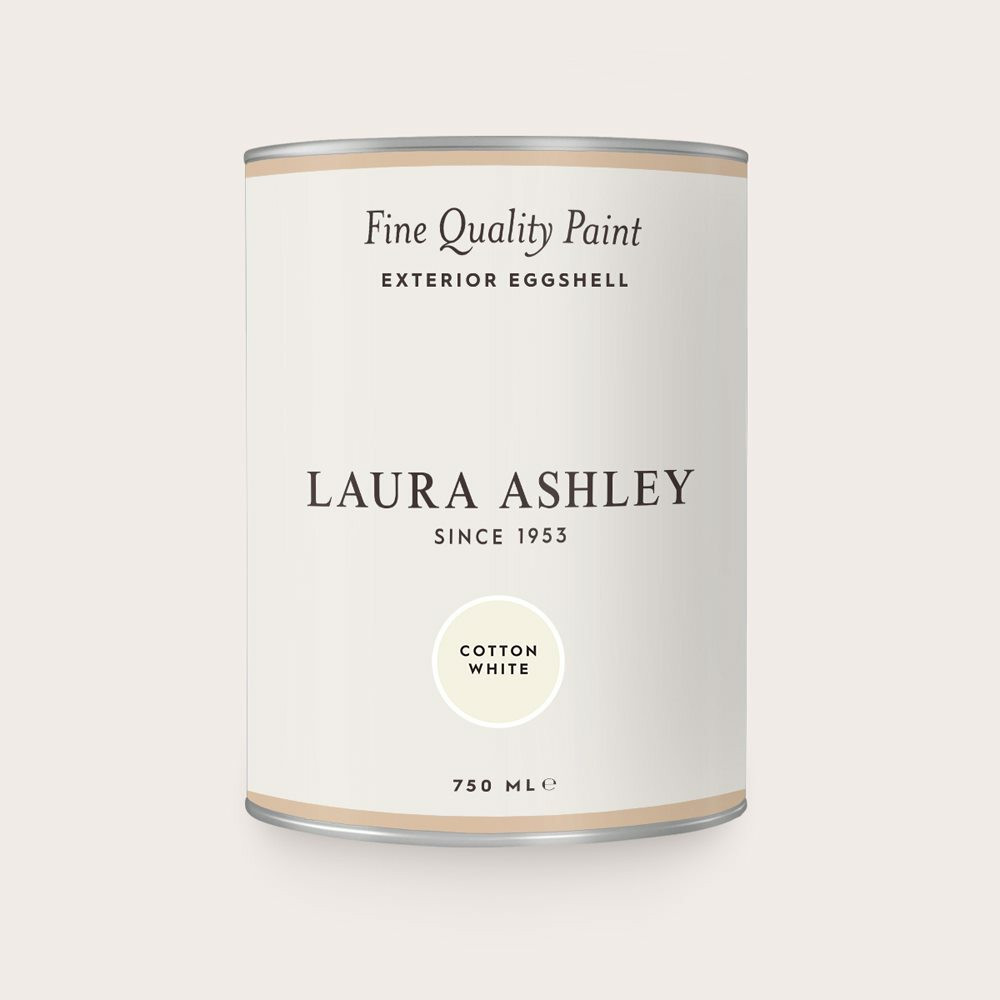
Laura Ashley 750ml Exterior Eggshell Paint
Weatherproof eggshell for outdoor woodwork
750ml Laura Ashley exterior eggshell — UV-stable, moisture-resistant paint for outdoor doors, window frames, fascias and exterior trim. Formulated for long-term weather exposure.
What exterior eggshell does differently
Outdoor paint has to handle conditions that interior paint was never designed for — rain, frost, UV degradation, wood expansion and contraction across seasons. Laura Ashley exterior eggshell is formulated specifically for these conditions:
UV stability — interior paint fades quickly under direct sunlight. Exterior paint uses UV-resistant pigments that maintain their colour for 5–10+ years outdoors.
Moisture resistance — outdoor wood expands and contracts with humidity changes. Exterior paint has the flexibility to move with the wood without cracking, and seals moisture out of the wood surface.
Fungicide and mould resistance — includes additives that resist mould and algae growth on exterior surfaces in damp conditions.
Temperature range — maintains adhesion and flexibility across the full temperature range an outdoor surface experiences.
Where exterior eggshell works
Front doors — the single most common application. A painted front door is the face of the house and benefits from the rich finish of an eggshell that withstands daily weather exposure.
Window frames and sills — wooden window frames that need regular repainting to maintain weather-proofing. Exterior eggshell is the standard spec.
Fascias, soffits and bargeboards — exterior trim under the roof line. Often high up and awkward to access, so a paint that lasts matters.
Garage doors (wooden) — wood garage doors benefit from regular repainting; exterior eggshell protects and finishes.
Shed doors and trim — though for large shed surfaces, garden collection paint is often better value.
External railings and wrought iron (wood only) — for metalwork, a dedicated metal paint is usually preferable.
Where exterior eggshell isn't right
Indoors — exterior paint isn't formulated for indoor air quality (lower VOCs not prioritised), and interior-grade interior eggshell has better indoor-specific properties.
Main exterior walls and masonry — use dedicated masonry paint for render, brick and stonework.
Metal surfaces — metal paints contain specific rust-inhibitors that wood paints don't.
Decking and horizontal surfaces — use dedicated decking paint or stain. Eggshell doesn't handle foot traffic.
Preparation — critical outdoors
Outdoor painting is more demanding than interior work. Preparation determines how long the finish lasts:
Clean thoroughly — power wash or scrub-wash exterior wood to remove dirt, algae and loose paint. Allow to dry fully (48+ hours in dry conditions).
Remove loose and flaking paint — scrape all loose paint back to sound paint or bare wood. Feather-sand the edges of scraped areas so new paint blends smoothly.
Fill and sand — exterior-grade wood filler for holes and cracks. Sand smooth with 120-grit.
Prime bare wood — exposed bare wood must be primed with exterior wood primer before eggshell top coats. Skipping primer is the most common cause of peeling exterior paint.
Caulk gaps — exterior-grade caulk along joins between wood and walls, around window frames and door frames. Stops water getting behind the paint.
Check the weather forecast — paint only in dry conditions with at least 24 hours of no rain forecast. Cold (below 10°C) and wet conditions spoil exterior paint adhesion.
Coverage and coat count
750ml of Laura Ashley exterior eggshell covers roughly 8–10m² per coat — slightly less than interior eggshell because exterior paint is thicker-bodied.
Doors and frames — 2–3 coats on a door, including the frame. A 750ml tin covers 1–2 full door installations.
Window frames — 2 coats on primed frames. 750ml covers 4–6 typical window frames.
Always apply at least two coats. Exterior surfaces need full-body coverage to resist weather.
Frequently asked questions
How often does exterior paint need repainting?
Depends on exposure. South-facing and sea-exposed surfaces may need repainting every 3–5 years. Sheltered north-facing surfaces can last 7–10 years. Inspect annually for early signs of peeling, flaking or fading and repair before full repainting is needed.
Can I paint straight over old exterior paint?
Only if the old paint is sound (not flaking or peeling), clean, and compatible with the new paint (both eggshell/oil-based or both water-based). If the old paint is in poor condition, scrape back to sound surfaces first.
What temperature is too cold for painting outdoors?
Below 10°C for most exterior paints. Cold paint doesn't flow properly, doesn't cure, and doesn't adhere well. Also avoid painting in direct hot sun (over 25°C) — the paint dries too fast and shows brush marks.
Related categories
- Laura Ashley Paint — full paint range
- Interior Eggshell — indoor equivalent
- Garden Collection — for sheds and fences
- Paint Accessories — brushes and prep tools