
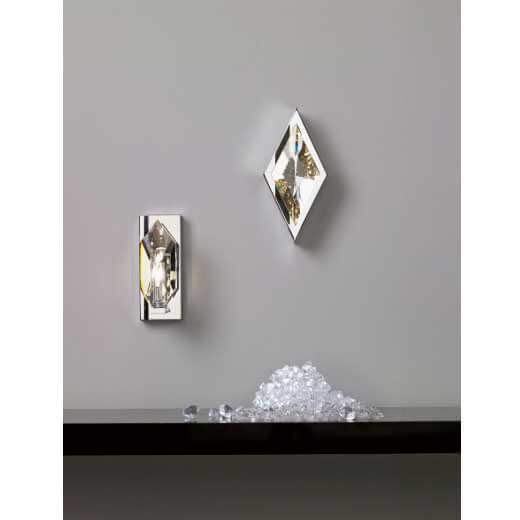
Wall Light
Wall lights that work as hard as they look
The difference between a room that feels finished and one that doesn't is almost always the wall lights. One fixture at ceiling level does a job; wall lights do the styling.
Where wall lights earn their place
A well-lit room isn't usually lit from the ceiling alone. It's lit in layers: the ceiling light for general brightness, wall lights for shape and warmth, table and floor lamps for the detail. Wall lights are the layer most rooms are missing.
The quickest places they earn their keep: either side of a bed as readers, either side of a fireplace or mirror as framing, along a hallway to stretch the eye, beside a sofa to soften the ceiling-light glare, and up a staircase where a pendant would feel wrong. Once you add them, the room feels properly finished.
Styles and when to use each
Single wall lights are the default — one arm, one bulb, usually with a shade or diffuser. Works as bedside readers, beside a fireplace, or spaced along a hallway. Switched versions include a pull-cord or integrated switch; unswitched versions run off a wall switch.
Double wall lights give twice the output from a single fixing point. Ideal above a mirror, in a stairwell where you want more spread, or as a statement either side of a fireplace.
Wall brackets are the traditional silhouette — ornate arms, candle-style bulbs, often with a shade on top. Works beautifully in period interiors, hallways and formal dining rooms.
Adjustable and swing-arm wall lights let you direct the beam — readers by the bed, task lights over a desk, or feature lights highlighting artwork. Swing-arm designs pull out from the wall so you can angle the light exactly where it's needed.
Up/down wall lights throw light both at the ceiling and the floor, creating two bands of soft light on the wall itself. Modern, architectural, and the easiest way to make a plain hallway feel considered.
Switched, unswitched and plug-in
Most interior wall lights are hardwired and controlled by a wall switch, either on the same circuit as the ceiling light or on a separate spur. If you want independent control without rewiring, look for switched wall lights with an integrated pull-cord or rocker — common on bedside and hallway fittings.
Plug-in wall lights (often called wall sconces with a cord) skip the wiring altogether: they mount on the wall but plug into a nearby socket. Perfect for rented spaces, temporary installations or anywhere you don't want to chase cables into a wall. Look for the plug symbol on the product page.
Bathroom wall lights — IP ratings matter
Standard wall lights are not suitable for bathrooms. The bathroom is divided into zones based on proximity to water, and each zone requires a minimum IP (Ingress Protection) rating: IP44 for zone 2, IP65 for zone 1, and a 12V low-voltage fitting with IP rating appropriate to the zone inside zone 0. Our separate bathroom wall light range contains only fittings rated for bathroom use.
Bulbs, dimming and smart bulbs
Most wall lights take E14 or G9 bulbs; some modern designs use integrated LEDs that can't be replaced but last 25,000+ hours. Check the product page for exact bulb type, maximum wattage and whether the fitting is dimmable.
For bedside readers, a warm 2700K LED is the right default — relaxing, easy on the eyes, and good for wind-down light. For hallways and staircases, 3000K gives a slightly crisper feel that reads as safer on stairs. Smart bulbs in E14 and G9 are widely available if you want per-fitting app control without replacing the wall light itself.
Frequently asked questions
Can I fit a wall light myself?
Replacing a hardwired wall light like-for-like is straightforward DIY with the power off at the consumer unit. Installing a new wall light where there wasn't one before involves chasing a cable into the wall and wiring into an existing circuit — that should be done by a qualified electrician and will usually need signing off under building regulations.
Do I need a switch on the wall, or are there switched versions?
Both exist. Hardwired wall lights without an integrated switch need a wall switch somewhere on the circuit. If you want independent control without rewiring, look for switched wall lights with a pull-cord or integrated switch — very common on bedside readers and hallway fittings.
Can wall lights go in a bathroom?
Only if they're IP-rated for the zone you're installing in. Standard interior wall lights are not suitable for bathrooms. Use our bathroom wall light range, where every fitting has the right IP rating for bathroom use.
How high should wall lights be mounted?
Roughly eye-level when standing — 150–170cm from the floor for general wall lights. Bedside readers sit lower, around 120–140cm above the floor so they're at reading height when propped up in bed. Stairwell wall lights should be evenly spaced with the beam lighting the stair treads, not the wall above.
Can I use smart bulbs in wall lights?
Yes, provided the cap matches (E14, E27 or G9) and the shade has enough clearance for the slightly larger smart bulb body. For integrated-LED wall lights, the LED can't be swapped — choose a smart-compatible fitting from the start, or use a smart dimmer switch on the circuit.
Related categories
- Bathroom Wall Lights — IP-rated fittings safe for every bathroom zone
- Picture Lights — dedicated wall-mounted lights for artwork and framed photos
- Exterior Wall Lights — weatherproof fittings for the outside of the house
- Smart Wall Lights — app-controlled wall lights with dimming and scheduling
- Table Lamps — pair with wall lights for a properly layered scheme