
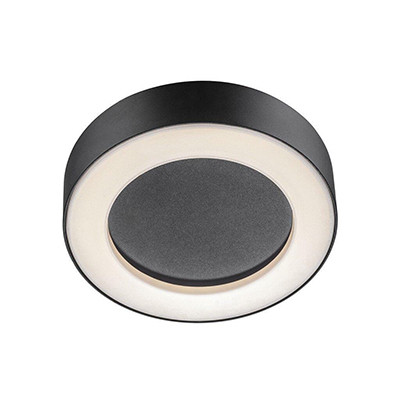
Exterior Ceiling
Ceiling lights for covered outdoor spaces
Porches, verandas, car ports and soffit-mounted applications. IP-rated flush and semi-flush fittings built to handle the outdoor environment while sitting tight against the ceiling.
Where an exterior ceiling light is the right call
Anywhere you have a covered outdoor ceiling and want tidy, overhead light without a pendant hanging down into the space. Typical applications:
Front and back porches — the most common use. A flush or semi-flush IP-rated fitting mounted directly to the porch ceiling, giving even light across the doorway and welcome area.
Verandas and covered terraces — longer runs of ceiling space that need multiple fittings for even coverage. Usually installed as arrays, similar to indoor ceiling lighting.
Car ports and garages — functional rather than decorative. Cool-white LED output for visibility during vehicle use.
Soffits and overhangs — mounted upside-down under building soffits, throwing light down onto walls, windows or the ground immediately below. Excellent for architectural accent lighting of the building's exterior.
Summer houses, garden rooms and outdoor kitchens — where you want ceiling lighting in a semi-outdoor living space that isn't fully enclosed.
Flush vs semi-flush vs pendant
Flush fittings sit tight against the ceiling. The right choice for low-ceiling porches, soffit installations and anywhere headroom is tight. Also the most weather-sealed option — fewer openings for moisture ingress.
Semi-flush fittings drop slightly below the ceiling on a short stem. Gives a little decorative presence where the porch or veranda ceiling is high enough to accommodate it (2.4m+). Less common outdoors than indoors.
Pendants — for dedicated pendant-style outdoor fittings, see exterior pendants. Use where the space is tall enough to carry the drop and you want deliberate decorative presence.
IP ratings for covered outdoor ceilings
IP44 is the usual minimum for covered outdoor ceiling positions — sheltered from direct rain but still exposed to humidity, wind-blown moisture and temperature swing. IP65 is the safer spec if the covered area is open on multiple sides (exposed verandas, car ports) where driven rain can reach the fitting.
For fully exposed ceiling positions (for example, where a ceiling light is mounted to a soffit with no other weather protection), IP65 is essential.
Colour temperature and output
For welcoming porch light, 2700K warm white gives a traditional, inviting glow. For car ports, summerhouses and functional covered areas, 3000–4000K is more practical. Match the colour temperature to the other lights on the building — a warm-white porch paired with a cool-white car port creates an uncomfortable transition.
Most exterior ceiling lights use integrated LEDs — sealed form, better IP-rating, 25,000+ hour life. Traditional porch lanterns with replaceable E27 bulbs also exist for owners who want the flexibility of swappable bulbs.
Installation and sensors
Exterior ceiling lights hardwire into the building circuit, notifiable under Part P. Many include built-in PIR motion sensors or dusk-till-dawn photocells — particularly useful for porches where you want reliable automatic operation rather than having to remember a wall switch every evening.
Frequently asked questions
What IP rating do I need?
IP44 for well-covered positions (under a solid porch roof, fully enclosed car port). IP65 for open-sided covered areas where driven rain can reach the fitting. If in doubt, IP65 is safe everywhere outdoors.
Can I use an interior ceiling light under a covered porch?
No. Interior fittings are not rated for outdoor humidity, moisture ingress or temperature variation. They corrode internally, fail prematurely, and don't meet current wiring regulations for outdoor installation.
Can I install an exterior ceiling light myself?
Hardwired exterior ceiling installation is notifiable under Part P and must be done by a qualified electrician. This includes like-for-like replacements in most cases.
Do exterior ceiling lights need to be bright?
Depends on the application. A welcoming porch light should be warm and soft — 600–800 lumens is plenty. A car port or soffit array needs higher output for functional use — 1000+ lumens per fitting. For large covered terraces, layer multiple fittings rather than relying on a single high-output light.
Related categories
- Exterior Lighting — the full outdoor range and zone/IP primer
- Exterior Pendants — pendant-style alternatives for taller covered ceilings
- Exterior Wall Lights — wall-mounted fittings for porches and entrances
- Exterior Recessed — recessed downlights for soffit and porch ceilings
- Interior Ceiling Lights — standard indoor ceiling fittings