
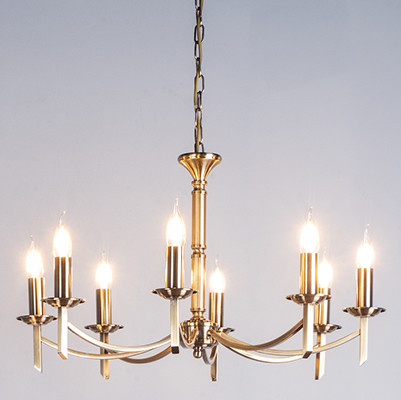
Dual Mount Pendant
Pendant or semi-flush — you decide at install
Dual mount pendants ship with both fixings included. Hang with the full drop for a statement, or mount close to the ceiling for a lower-profile semi-flush. One fitting, two installations.
What "dual mount" means
A dual mount pendant is designed to be installed two ways — as a pendant with a full cord or chain drop, or as a semi-flush fitting close to the ceiling with the cord removed. The fitting ships with both mounting parts included, and the choice is made at installation.
It's a pragmatic format. Rather than committing to pendant or semi-flush before you've seen the fitting in the room, you can install, live with it, and switch mounting method if it doesn't work. The design work is done — both configurations look like finished, intentional fittings rather than compromises.
When dual mount matters
Variable ceiling heights — split-level rooms, renovations, or rooms where you're not sure if the ceiling will change. The fitting can migrate between rooms and adapt.
Borderline ceilings (2.4–2.6m) — the classic "is a pendant too much?" zone. Dual mount lets you try the pendant configuration and fall back to semi-flush if it feels oppressive.
Renovation projects — ideal when buying before the room layout is finalised, or when the ceiling height isn't yet known.
Rental properties — dual mount gives flexibility for the next room or next property without buying a new fitting.
Hedged aesthetic choices — if you're torn between pendant drama and semi-flush discretion, dual mount resolves the decision without committing.
Pendant mode vs semi-flush mode — when to pick which
Install as a pendant when the ceiling is 2.6m or taller, when the fitting is doing visual work (focal point, decorative presence), and when there's nothing directly below that demands the cord's clearance. Use when the room can afford the vertical space.
Install as a semi-flush when the ceiling is 2.4m or lower, when the fitting is primarily about function rather than feature, or when the room has heavy visual activity elsewhere that shouldn't compete with a dropped pendant. Semi-flush also suits hallways, small bedrooms and bathrooms with lower ceilings.
Style and bulb range
Dual mount pendants span most of the pendant style spectrum — from modern geometric fittings to traditional shaded designs. Because the same fitting has to work in both configurations, most dual mount designs lean towards clean, symmetrical forms that read well from any angle.
Most take E27 or E14 bulbs; some modern dual mount pendants use integrated LEDs. The bulb choice doesn't change between mounting modes — only the drop.
Installation
Dual mount pendants install like any other ceiling fitting — the mounting hardware is in the box, and the electrician picks which fixing to use based on the chosen configuration. Swapping between pendant and semi-flush mode later is possible but requires taking the fitting down and reinstalling with the alternative fixing, so it's not something you'd do often.
Frequently asked questions
Can I switch between pendant and semi-flush mode myself?
Not without taking the fitting down, rewiring the ceiling mount, and reinstalling. It's a full reinstall rather than a quick adjustment — so most people pick one configuration at install and keep it. The switching option exists mainly for moving the fitting to a different room.
Does a dual mount pendant cost more than a single-mode fitting?
Slightly, because of the extra mounting hardware included in the box. The trade-off is flexibility: no risk of buying a pendant for a ceiling that turns out too low, or a semi-flush for a ceiling that turns out tall enough for a proper drop.
Which mode looks "right"?
Depends on the room. Under 2.4m ceilings, semi-flush almost always looks better. Over 2.6m ceilings, pendant usually looks better. In the 2.4–2.6m zone, it's a judgment call — hang the fitting in pendant mode first, live with it for a week, then decide.
Are dual mount pendants dimmable?
The mounting mode doesn't change dimmability — it's a function of the bulbs and dimmer switch. Most dual mount pendants support dimmable LEDs paired with a trailing-edge LED dimmer. Check the product page for confirmation.
Related categories
- Pendant Lights — the full pendant range
- Ceiling Lights — flush and semi-flush fittings
- Semi-Flush Ceiling Lights — fixed semi-flush alternatives
- Single Light Pendants — pendant-only alternatives
- Modern Pendants — modern styles, some of which are dual mount