
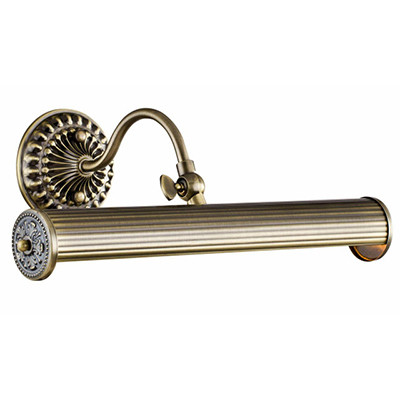
Picture Lights
Light for artwork, done properly
Picture lights are purpose-built for illuminating framed artwork, canvases and wall-mounted features. Warm colour, flattering beam, minimal glare on glass — the right tool for the job.
Why a dedicated picture light beats a spotlight
You could light a picture with a ceiling spotlight aimed at the wall — and it would work, up to a point. But dedicated picture lights do a better job for three reasons:
Beam shape — picture lights throw an elongated, rectangular beam matched to the aspect ratio of a standard picture. Ceiling spotlights throw a circular beam that lights part of the picture and part of the surrounding wall.
Mounting angle — picture lights mount directly above the frame and angle downwards onto the surface. The result is even illumination across the picture with almost no glare on glass. Ceiling spotlights cast light at a steeper angle and can produce visible glare on framed glass or glossy prints.
Colour accuracy — picture lights typically specify a high CRI (Colour Rendering Index) value — usually 90+. This means colours in the artwork look right rather than washed-out or shifted. Many general ceiling spotlights are CRI 80, which is noticeably inferior for art.
For a single piece of artwork you care about, a picture light is the right fitting. For a wall of pictures lit collectively, a ceiling spotlight array from the spotlight range can work well.
Wired, plug-in or battery
Three power options:
Hardwired picture lights — connected to a dedicated power supply via an in-wall cable. The cleanest look (no visible cord) but requires an electrician for the wiring work, typically during redecoration when the wall is being worked on anyway.
Plug-in picture lights — a visible cord runs from the fitting down to a standard wall socket. Quick to install (no electrician), but the cord is visible. Works best where a socket sits close behind the picture or where the cord can be hidden behind furniture.
Battery-powered picture lights — internal rechargeable battery or replaceable AA cells. Fully wire-free. Good for rental properties, listed buildings where wiring isn't permitted, and temporary installations. Runtime typically 20–50 hours per charge on modern LED versions.
Styles and finishes
Picture lights are traditionally mounted in brass or bronze finishes with a slim curved arm extending from the wall to the picture's top edge. These suit classical and period interiors. Modern picture lights come in matt black, brushed chrome, satin nickel and slim low-profile forms that suit contemporary galleries.
The fitting's depth matters. Pictures mounted flush to the wall accept a short-arm picture light (5–10cm reach); pictures in deep frames or with matting need longer-arm versions (15–20cm reach) to angle correctly.
Sizing to the picture
The picture light's width should match the frame:
Under the frame width — lights the centre of the picture but leaves the edges darker.
Roughly the frame width (ideal) — illuminates the whole picture evenly.
Wider than the frame — looks unbalanced and wastes light on surrounding wall.
Most picture lights come in standard widths: 30cm (small pictures), 40–50cm (medium), 60–80cm (large), 1m+ (very large canvases and panoramic pieces). Pick the closest match to your frame width, rounding down if between sizes.
LED, colour and dimming
Modern picture lights almost all use integrated LEDs. Warm white (2700–3000K) is the right default for artwork — warmer light makes oil paintings read with richer tones and photographs look less clinical. Cooler than 3000K can make pictures look washed-out.
Some premium picture lights include tuneable white, letting you adjust the colour temperature to match specific artwork or time of day. Dimming is almost always supported — a dimmable picture light paired with a compatible dimmer lets you drop the intensity for evening viewing.
Frequently asked questions
Will a picture light damage my artwork?
Modern LED picture lights produce almost no UV and minimal heat, so they don't accelerate fading or damage pigments the way older incandescent or halogen picture lights did. Valuable or sensitive artwork benefits from low-UV LED illumination rather than natural sunlight.
How bright should a picture light be?
Most picture lights output 200–500 lumens. That's enough to illuminate the picture clearly in normal room ambient light without overpowering the surrounding wall. Larger pictures and canvases can benefit from brighter fittings (up to 800 lumens); smaller framed prints often work well with lower output.
Can I get a picture light without visible wiring?
Yes, in two ways. Hardwired picture lights run cable inside the wall and require electrician installation. Battery-powered picture lights skip the wiring entirely — small LED fittings with rechargeable batteries give 20–50 hours of use per charge.
Will a picture light cause glare on framed glass?
Not normally — the downward angle of a picture light throws light onto the picture surface rather than bouncing back at the viewer. If glare is visible, the light is usually mounted too low or at too shallow an angle. Most picture lights specify the correct mounting position for the fitting depth.
Related categories
- Wall Lights — general wall lighting for bedrooms, hallways and living rooms
- Spotlights — ceiling-mounted directional lighting for larger feature walls
- Portable Lighting — battery-powered alternatives for unwired positions
- Lanterns — decorative indoor wall-mounted lighting