
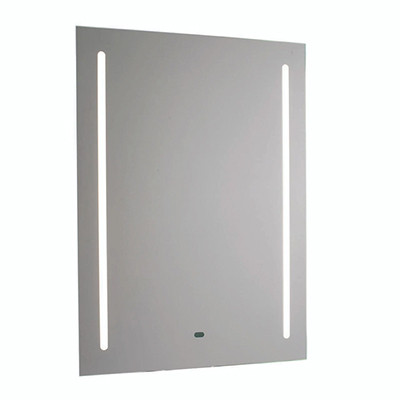
Bathroom Mirrors
Mirror and light in one IP-rated fitting
Illuminated bathroom mirrors combine the mirror and the light into a single sealed unit. Flattering, functional, and engineered to handle steam, moisture and daily use.
Why an illuminated mirror beats a mirror plus separate lights
Two reasons, both practical.
Light quality. An illuminated mirror puts the light source right where you need it — around the face, at face height — rather than relying on ceiling fittings that cast shadows under the eyes. For shaving, makeup and grooming, nothing else comes close.
IP rating. The LED and the mirror are designed together as a single sealed unit, rated for bathroom zones out of the box. No separate spec work, no compatibility checks between the mirror and the light, no worrying about the gap between them.
Everything in this range is IP-rated appropriately for bathroom use. For the full zone primer, see the bathroom lighting parent page.
Features worth looking for
Anti-fog (demister) pad — a low-voltage heating element behind the mirror that keeps a clear patch through shower steam. Worth having on any mirror facing the shower. Usually activated via a separate switch or automatically with the LED.
Tuneable white — mirrors that shift from warm (3000K) for relaxed bathroom ambience to cool daylight (5000K+) for accurate makeup application. The single most useful smart-like feature on a bathroom mirror, because the two use cases want genuinely different colour temperatures.
Motion or touch activation — on/off without needing a separate wall switch. Touch-sensor strips and motion sensors both feature across the range. Useful where the existing bathroom doesn't have a switch in the right place for a new mirror circuit.
Shaver sockets — some illuminated mirrors include an integrated shaver socket, removing the need for a separate wall socket near the mirror.
Bluetooth and music — niche, but some premium mirrors include Bluetooth speakers for playing music from a phone while you're in the bathroom.
Magnification — inset magnifying sections within the main mirror, for close-up work.
Sizing to the basin and vanity
The mirror should be roughly the same width as the basin, vanity unit or console below it — or slightly narrower, never wider. A mirror wider than the furniture below looks top-heavy and unbalanced.
For height, the bottom of the mirror should sit 15–20cm above the top of the basin, with the top of the mirror at or just above the user's eye-line. In households with varying heights, err towards the taller member of the household and compensate with the mirror's shape rather than position.
Shapes range from rectangular (the most practical) through rounded-rectangle to fully circular. Circular mirrors suit smaller bathrooms where a rectangular mirror would dominate; rectangulars give more usable reflection area.
Installation
Illuminated mirrors hardwire into the existing bathroom circuit — not into a plug socket. Installation is a Part P-notifiable job and must be done by a qualified electrician, especially given the zone placement. Most mirrors ship with the LED driver inside the mirror housing, so the ceiling-side work is a standard spur connection.
The mirror itself mounts to the wall with brackets or studs included — weight varies from 5kg to 20kg+ depending on size, so check the wall fixing rating before install.
Frequently asked questions
Do I need a demister pad on a bathroom mirror?
Only if the mirror faces the shower or bath directly. If the mirror is across the room from the shower, steam will still reach it but takes longer to fog it — a demister is nice-to-have rather than essential. For mirrors directly opposite a shower, a demister is the difference between a usable mirror and a fogged one.
What colour temperature is best for a bathroom mirror?
3000–4000K is the right range for most bathroom mirrors — neutral enough to read as natural skin tone, warm enough not to feel clinical. For makeup-heavy use, tuneable white that reaches 5000K daylight gives the most accurate colour representation. Below 2700K, skin tones look sallow.
Can I install a bathroom mirror myself?
No. Illuminated mirrors hardwire into the bathroom circuit and are covered by Part P building regulations. Installation must be done by a qualified electrician, and the job is usually notifiable regardless of whether it's a new install or a replacement.
What's the IP rating I need?
Most illuminated mirrors are IP44-rated, which covers Zone 2 (the 60cm area around the basin). For a mirror directly above or beside a shower, check the product page — some high-end bathroom mirrors are IP65-rated for more exposed positions.
Are bathroom mirrors dimmable?
Some are, typically via a touch control or companion app. Mains-voltage dimmer switches cannot be installed inside the bathroom zones, so dimming is built into the mirror itself rather than wired to a wall dimmer.
Related categories
- Bathroom Lighting — IP zone primer and full bathroom range
- Bathroom Wall Lights — separate wall fittings for around the mirror
- Bathroom Ceiling Lights — general ceiling lighting for the bathroom
- Bathroom Spotlights — IP-rated downlights