
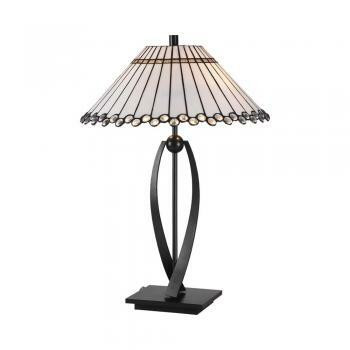
Tiffany Table Lamp
The iconic Tiffany format
Stained glass table lamps — the format that made Louis Comfort Tiffany famous in the 1890s and still the most popular Tiffany application today. Bedside, sideboard, console and dressing-table lighting with warm amber glow.
Why a Tiffany table lamp changes a room
Of every Tiffany format, the table lamp is the most iconic — it's the silhouette most people picture when they hear "Tiffany lamp". For over a century, the combination of a richly-patterned stained glass shade on a substantial metal base has defined warm, characterful table lighting.
The defining qualities:
Warm amber light through coloured glass — no other table lamp produces quite the same quality of light. The stained glass colours the light passing through, projecting warm tones onto surrounding surfaces.
Decorative presence day and night — the stained glass shade is beautiful even unlit. A Tiffany lamp works as a decorative object during the day and a light source in the evening.
Hand-assembled quality — each glass piece cut, copper-foil-wrapped and soldered individually. Modern Tiffany table lamps still use this original technique. See the Tiffany Lighting parent for full construction details.
Substantial physical presence — Tiffany lamps are usually heavier than equivalent non-Tiffany table lamps. The metal base has weight and the shade is genuinely made of glass. This settled, substantial quality is part of the appeal.
Common shade patterns
Dragonfly — one of Louis Tiffany's signature motifs. Rich blues, greens and amber. The most recognised Tiffany pattern.
Peony and floral — the "classic" Tiffany look. Pink and red blooms on amber background with green leaves.
Lily (also called wisteria) — cascading purple-blue blooms. Dramatic, rich, one of the most valuable historical Tiffany designs.
Mission / geometric — simpler repeating patterns in amber and green. Arts-and-Crafts aesthetic, less ornate than floral Tiffany.
Dome — smooth curved shades with abstract or subtle patterning. The simplest Tiffany silhouette.
Where Tiffany table lamps work
Traditional living rooms — a pair of Tiffany table lamps on either side of a sofa gives warm accent light with strong period character.
Bedside — smaller Tiffany lamps make distinctive bedside readers. The amber light is more atmospheric than standard table-lamp light, which suits evening reading.
Sideboards and consoles — a Tiffany lamp centred on a sideboard or hallway console sets a traditional tone for the whole room.
Studies and home offices — classical "banker's lamp" alternative. A Tiffany table lamp on a desk combines function with character.
Dining room sideboards — Tiffany table lamps dim to warm amber for evening ambience during dinners.
Traditional and period interiors — the natural fit. Victorian, Edwardian and Arts-and-Crafts properties particularly suit Tiffany table lamps.
Sizing
Tiffany table lamps come in a range of sizes:
Small (30–40cm total height) — bedsides, compact console tables, desk use.
Medium (40–55cm) — the most common size. Side tables, sideboards, console tables.
Large (55–75cm) — statement pieces for hallway consoles, dining sideboards, and larger rooms where the lamp needs visual weight.
Very large (75cm+) — museum-scale reproductions of historical Tiffany designs. Heavy, expensive, striking.
Scale to the surface the lamp will sit on — the lamp should be roughly two-thirds the width of the table or sideboard, with the shade appearing substantial but not overwhelming.
Bulbs
Most Tiffany table lamps take E27 bulbs; smaller versions use E14. Warm white (2700K) LED filament bulbs are the right default — they preserve the warm amber character that Tiffany glass is designed around while running cool enough to eliminate any heat concerns.
Avoid cool-white or daylight bulbs — they clash with the warm-toned glass and undermine the intended effect.
Frequently asked questions
Are these genuine Tiffany antiques?
No — these are modern Tiffany-style lamps made using the original construction technique (cut glass pieces, copper foil, hand-soldering). Original Louis Comfort Tiffany pieces from the 1890s–1930s are now valuable antiques sold at specialist auction. Modern Tiffany-style lamps offer the same aesthetic and construction quality at a fraction of the price.
Can I use a smart bulb in a Tiffany table lamp?
Yes, provided the cap matches (usually E27) and the shade has enough internal clearance. Smart bulbs are slightly larger than standard LEDs but most Tiffany lamp shades have plenty of room. Warm-white smart bulbs work best; avoid full-colour bulbs (the coloured glass already colours the light).
How fragile is the stained glass shade?
More fragile than a plain glass shade — the leaded joints between pieces can stress if the shade is dropped or knocked. Normal handling is fine; avoid jarring impacts. Clean with a soft cloth, never immerse in water.
Related categories
- Tiffany Lighting — the full Tiffany range and heritage primer
- Table Lamps — non-Tiffany table lamp range
- Tiffany Floor Lamps — taller Tiffany alternatives
- Traditional Lighting — broader traditional range
- Shade Only — non-Tiffany replacement shades