
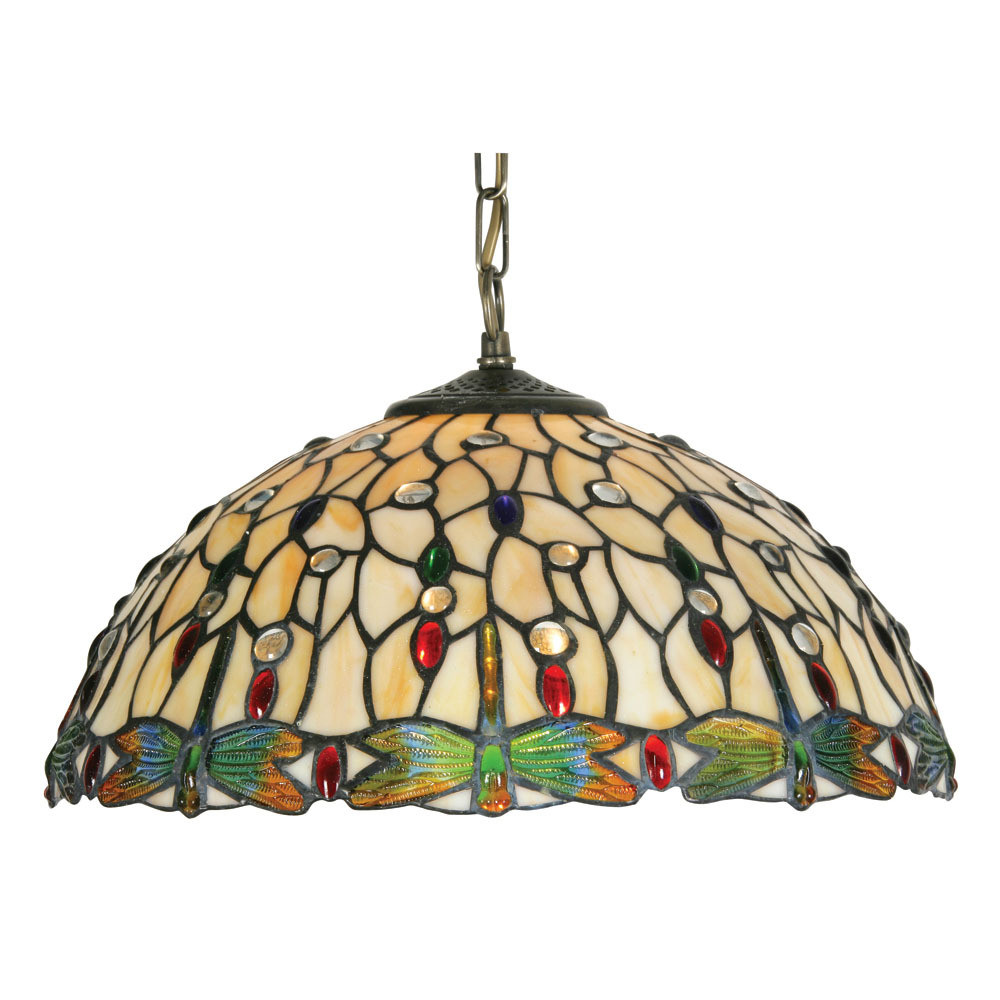
Tiffany Lighting
Stained glass with warm amber light
Tiffany lighting — stained glass shades on metal bases, hand-assembled in the tradition originally made famous by Louis Comfort Tiffany in the 1890s. Table lamps, floor lamps, pendants, wall lights and ceiling fittings.
What Tiffany lighting actually is
Tiffany lighting isn't a brand name in modern usage — it's a style of construction. A Tiffany fitting has:
A stained glass shade — small pieces of coloured glass cut to shape, wrapped in copper foil, and soldered together to form a curved or flat shade. The technique was developed by Louis Comfort Tiffany in the 1890s using offcuts from his stained glass window workshop.
A metal base or frame — typically bronze-finish, sometimes patinated copper or dark antique metal. Holds the shade and contains the bulb holder.
A warm amber-to-multicolour light — the stained glass colours the light passing through. Warm yellows, ambers, greens, blues and reds throw richly-coloured light onto surrounding surfaces.
Hand-assembled construction — even modern Tiffany lighting is largely hand-made. Each piece of glass is cut, foil-wrapped and soldered individually. This is why Tiffany fittings cost more than machine-produced equivalents.
The Tiffany range in this shop
Every format, in Tiffany construction:
Tiffany Table Lamps — the most iconic Tiffany format. Stained glass dome or cone shades on metal bases. Works in traditional, eclectic and period-leaning interiors.
Tiffany Floor Lamps — floor-standing versions of Tiffany lamps. Standing height, usually with a single large shade.
Tiffany Pendant Lights — hanging Tiffany shades for dining rooms, kitchens and hallways.
Tiffany Wall Lights — wall-mounted Tiffany fittings, often used as dining-room accent lighting or hallway lights.
Tiffany Semi-Flush Ceiling — Tiffany fittings on short drops, suitable for standard-height ceilings.
Tiffany Flush Ceiling — Tiffany fittings tight to the ceiling, for low-ceilinged rooms.
Tiffany Easy-Fit Pendants — Tiffany shades that clip straight onto existing bulb holders.
Where Tiffany fittings work
Traditional and period interiors — the natural fit. Tiffany's Arts-and-Crafts heritage suits Edwardian, Victorian and period-style rooms directly.
Dining rooms — a Tiffany pendant over a dining table is a signature look. The rich amber light flatters dinner-table conversation.
Cosy living rooms — a Tiffany table lamp on a side table adds warm ambient light and decorative presence.
Traditional hallways — Tiffany wall lights or small pendants along a hallway give period character without formality.
Bedside reading — smaller Tiffany table lamps make distinctive bedside readers — though the coloured light may be a personal preference rather than universally suited.
Eclectic and curated interiors — Tiffany fittings work in eclectic rooms that mix multiple styles as statement pieces.
Tiffany works less well in strict modern, minimalist, Scandinavian or industrial interiors — the ornate construction and rich coloured glass fight those aesthetics.
Common Tiffany shade motifs
Floral designs — peony, rose, dragonfly-and-flower. The original Louis Tiffany aesthetic. Rich amber backgrounds with coloured botanical detail.
Geometric patterns — simple repeating patterns in amber, green and blue. Mission and Arts-and-Crafts-leaning. Slightly cleaner aesthetic than floral Tiffany.
Dragonfly — one of Louis Tiffany's signature motifs. Striking, rich blues and greens.
Fruit and nature — grape, leaf, tree motifs. Decorative and characterful.
Scenic landscapes — pictorial shades showing trees, sunsets or buildings. Rarer and more expensive; collector-grade Tiffany.
Bulbs for Tiffany fittings
Most Tiffany fittings take E27 or E14 bulbs. LED filament bulbs in warm white (2700K) are the right default — they preserve the warm amber character that Tiffany glass was designed around, while running cool enough to avoid any heat buildup inside the enclosed shades.
Avoid bright cool-white or daylight LEDs in Tiffany fittings — they clash with the warm-toned glass and undermine the whole visual effect.
Care and handling
Tiffany shades are more fragile than plain glass shades — the leaded joints between glass pieces can stress and separate if the shade is dropped or knocked. Handle carefully during installation and cleaning.
Cleaning: soft dry cloth for dust; damp cloth for marks. Never submerge a Tiffany shade in water — the copper-foil joints can be affected over time. Avoid glass cleaner, which can dull the leading.
Frequently asked questions
Are these genuine Tiffany lamps?
No — "genuine Tiffany" means lamps made by Louis Comfort Tiffany's workshop between roughly 1890 and 1930, which are now valuable antiques typically sold at auction. Modern "Tiffany-style" lamps (like those in this range) use the same construction technique and aesthetic but are contemporary manufacture.
Why is Tiffany lighting more expensive than similar-size lamps?
The construction. Each small piece of glass is cut to shape, wrapped in copper foil by hand, and soldered individually. A single Tiffany shade typically contains 200–500+ individual glass pieces. This hand-assembly is the main cost driver.
What bulbs work best in Tiffany fittings?
Warm white (2700K) LED bulbs — filament or standard. The warm colour temperature matches the amber glass and delivers the intended visual effect. Avoid daylight or cool-white bulbs.
Can Tiffany lamps be dimmed?
Yes, with dimmable LED bulbs and a compatible dimmer. Dimming a Tiffany lamp creates a particularly atmospheric effect — the glass glows warmly at lower levels. Well worth having on a reader or bedside Tiffany.
Related categories
- Tiffany Table Lamps — iconic Tiffany format
- Tiffany Pendants — hanging Tiffany fittings
- Traditional Lighting — broader period range
- Glass Finish — plain-glass alternatives
- Chandeliers — traditional formal chandelier alternatives
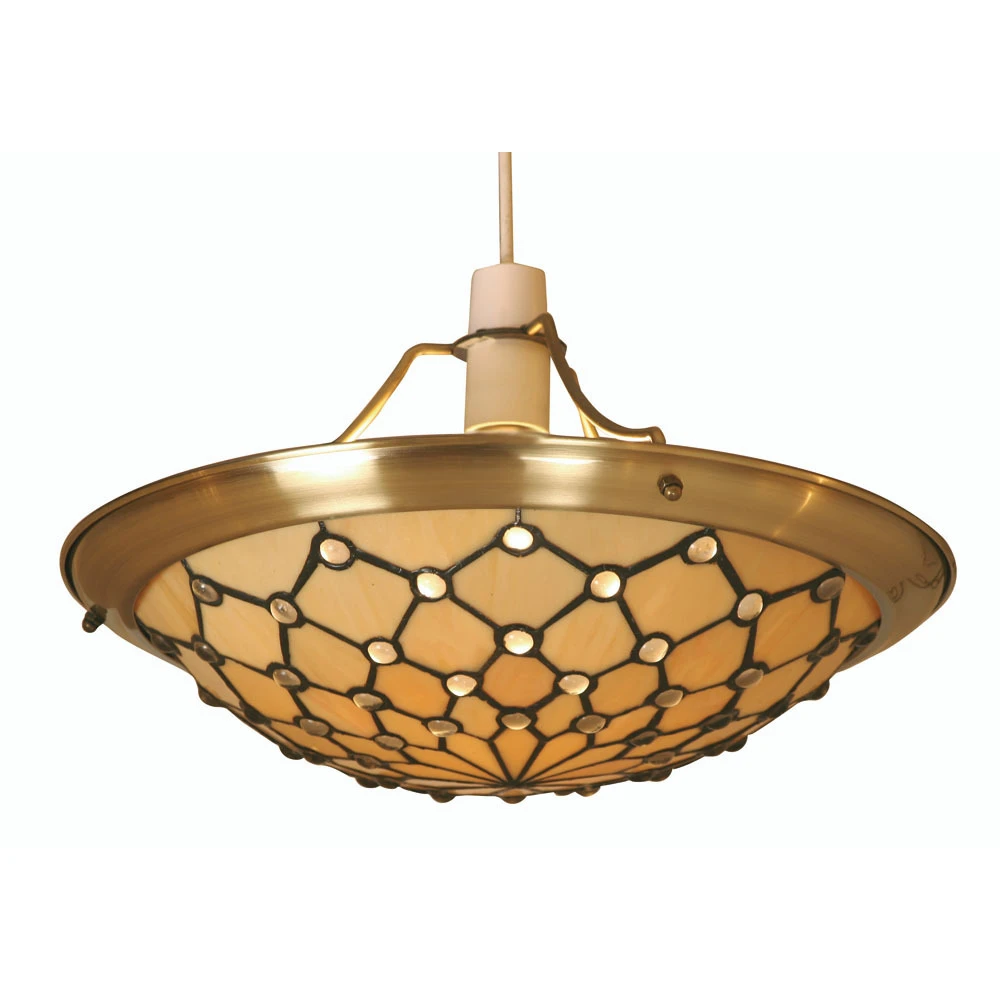
Tiffany Easy Fit Pendant
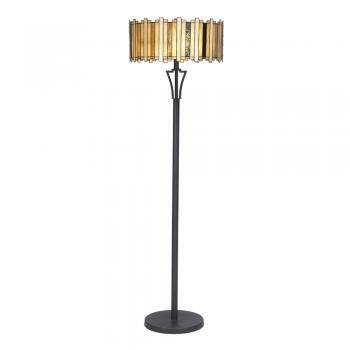
Tiffany Floor Lamp
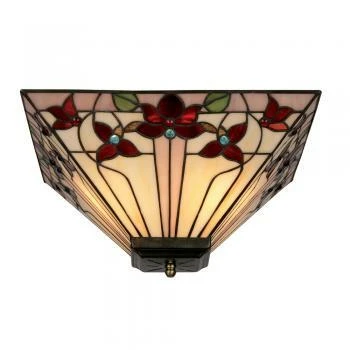
Tiffany Flush Ceiling
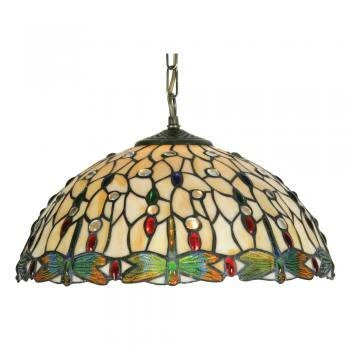
Tiffany Pendant Light
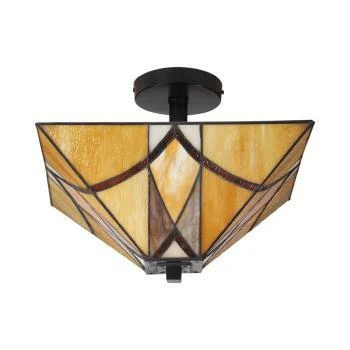
Tiffany Semi-Flush Ceiling
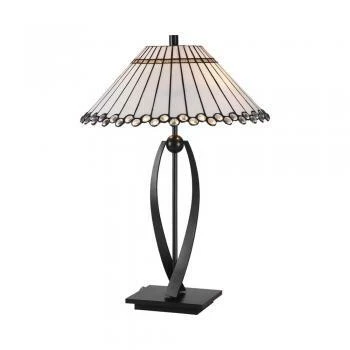
Tiffany Table Lamp
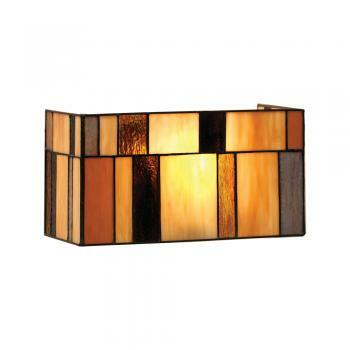
Tiffany Wall Light